


Spatial Awareness
Spatial awareness refers to a child's understanding of their body in relation to their surrounding environment.
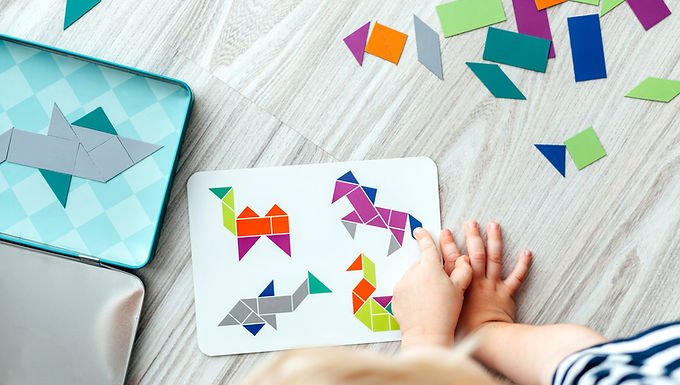
Here’s a set of practical activities to support the development of spatial awareness for home educated children. These activities help children understand their position in space, navigate their environment, and interact with objects and people around them.
🧠 What Is Spatial Awareness?
Spatial awareness is the ability to:
Understand where your body is in relation to objects and people
Judge distances, directions, and positions
Move safely and efficiently through space
🏡 Indoor Activities
1. Obstacle Course Navigation
Set up a course with chairs, cushions, tunnels, and tape lines.
Encourage crawling, jumping, and weaving through obstacles.
Builds awareness of body position and movement in space.
2. Treasure Hunt with Clues
Hide objects around the house.
Give directional clues: “Under the table,” “Next to the bookshelf,” “Behind the curtain.”
Enhances understanding of spatial terms and orientation.
3. Simon Says with Spatial Commands
Use instructions like “Stand behind the chair,” “Jump over the pillow,” “Spin next to the table.”
Reinforces spatial vocabulary and body control.
4. Mirror Movement Game
One person leads movements, the other mirrors them.
Helps children understand positioning and movement relative to others.
5. Twister or DIY Floor Grid
Use a Twister mat or tape a grid on the floor.
Call out positions: “Left hand on red,” “Right foot on blue.”
Encourages body awareness and spatial reasoning.
🌳 Outdoor Activities
6. Chalk Maze or Path
Draw a maze or path on the ground with chalk.
Children walk, hop, or skip through it.
Promotes directional awareness and planning.
7. Ball Games
Throwing, catching, and kicking with a partner or wall.
Use targets or zones to aim for.
Develops distance judgment and coordination.
8. Follow the Leader
Move through space with varied actions: tiptoe, crawl, jump, spin.
Leader changes direction and movement style.
Builds awareness of movement and space.
9. Shadow Tag
Try to step on each other’s shadows.
Encourages quick movement and spatial tracking.
🎨 Creative Movement Activities
10. Dance with Props
Use scarves, ribbons, or hoops.
Encourage flowing movements that explore space.
Great for expressive spatial exploration.
11. Body Mapping
Trace the child’s body on large paper.
Label body parts and discuss their position.
Helps with body awareness and spatial vocabulary.
12. Shape Walk
Tape shapes on the floor (circle, square, triangle).
Children walk around, inside, or jump between them.
Teaches spatial concepts like “inside,” “outside,” “next to.”
🧩 Everyday Life Activities
13. Furniture Navigation
Practice moving around furniture without touching it.
Try walking with a tray or balancing an object.
Builds control and spatial judgment.
14. Packing and Organizing
Pack a bag or box efficiently.
Arrange items by size and shape.
Encourages spatial planning and reasoning.